Stair design blends functionality with safety, impacting daily life; understanding stair terminology—stair, stairs, staircase, and step—is crucial for effective planning and construction.
The Importance of a Well-Designed Staircase
A thoughtfully designed staircase isn’t merely a connector between floors; it’s a fundamental element of a building’s safety and usability. Comfortable stairs, adhering to codes like the IRC stairs code, minimize fall risks by ensuring appropriate rise and run dimensions. Beyond safety, staircases significantly impact a home’s aesthetic appeal and spatial flow.
Poorly designed stairs can lead to accidents, while a well-executed design enhances accessibility for all ages and abilities. Considering factors like headroom and width, as highlighted in discussions, is paramount. Ultimately, a good staircase contributes to a home’s overall value and quality of life, blending form and function seamlessly.
Historical Overview of Staircase Evolution
Early stairs were rudimentary, often simple ladders or earthworks, serving basic access needs. Ancient civilizations, like the Egyptians and Romans, developed more structured stairs within monumental architecture. Medieval stairs were frequently spiral, maximizing space within castle walls – a space-saving solution still utilized today.
The Renaissance brought a focus on grand, sweeping staircases as statements of wealth and power. Later, Victorian designs emphasized ornate detailing and craftsmanship. Modern staircase design embraces minimalism and diverse materials like metal and glass, reflecting contemporary aesthetics. Throughout history, stair evolution reflects technological advancements and changing societal priorities.
Understanding Staircase Terminology
Distinguishing between “stair,” “stairs,” “staircase,” and “step” is fundamental. A staircase comprises multiple stairs, each with a step—a tread and riser—for vertical ascent.
Defining “Stair,” “Stairs,” “Staircase,” and “Step”
The nuances between these terms often cause confusion. A “stair” refers to a single tread or step within a larger structure. “Stairs,” used in the plural, can denote the entire set of steps, or simply multiple individual steps. Both “staircase” and “stairway” describe the complete assembly of steps—essentially, the entire structure enabling movement between floors. They are largely interchangeable.
Crucially, a “step” specifically identifies one individual unit consisting of a tread (the horizontal surface you step on) and a riser (the vertical portion between treads). Understanding this distinction is vital when discussing construction, measurements, or safety features related to stairs and staircases.
Key Components: Treads, Risers, Stringers, and Landings
A staircase comprises several essential components. Treads are the horizontal surfaces you walk on, demanding sufficient depth for comfortable footing. Risers are the vertical portions between each tread, defining the stair’s height. Stringers are the structural supports—typically angled beams—that support the treads and risers. They bear the entire load of the stairs and users.
Landings are horizontal platforms integrated into the staircase, providing resting points and facilitating changes in direction. They are crucial for safety and accessibility, especially in multi-story structures, breaking up long flights of stairs.
Types of Staircases
Staircase designs vary widely, including straight, spiral, L-shaped, U-shaped, and winder options, each offering unique spatial and aesthetic advantages for homes.
Straight Staircases: Simplicity and Efficiency
Straight staircases represent the most straightforward and often the most space-efficient design. Characterized by a single flight of steps without turns or landings, they are ideal for homes with ample linear space. Their simplicity translates to easier construction and generally lower costs compared to more complex designs. However, a long, uninterrupted run can feel less visually appealing and may require a substantial footprint.
Safety considerations for straight staircases include ensuring adequate headroom throughout the entire length and incorporating a continuous handrail for support. While lacking the visual interest of curved or spiral designs, their practicality and ease of use make them a popular choice for many homeowners seeking a functional and reliable staircase solution.
Spiral Staircases: Space-Saving Solutions
Spiral staircases are renowned for their compact footprint, making them excellent choices when space is limited. These staircases wind around a central column, offering a unique aesthetic appeal. However, their design presents certain challenges regarding usability and safety. Navigating a spiral staircase can be more difficult for young children, the elderly, or individuals carrying objects.
Building codes often impose stricter requirements on spiral staircases, particularly concerning tread depth and headroom. A well-designed spiral staircase prioritizes a comfortable and secure ascent and descent, incorporating a sturdy central column and a continuous handrail. They are often used as secondary access points or as a striking design feature.
L-Shaped (Quarter-Turn) Staircases: Common and Versatile
L-shaped staircases, also known as quarter-turn staircases, represent a popular and adaptable design choice for many homes. They incorporate a single 90-degree turn, breaking up the visual monotony of a straight run while remaining relatively straightforward to construct. This design efficiently utilizes space and often integrates seamlessly into existing floor plans.
The turn in an L-shaped staircase typically occurs midway up the run, often facilitated by a landing. Landings provide a resting point and enhance safety. These staircases offer a balance between functionality and aesthetics, making them a versatile option for various architectural styles and household needs.
U-Shaped (Half-Turn) Staircases: Enhanced Safety and Aesthetics
U-shaped staircases, characterized by a 180-degree turn, offer a compelling blend of safety and visual appeal. This design typically incorporates a substantial landing at the turn, providing a secure resting point and reducing the risk of falls. The half-turn configuration inherently slows ascent and descent, contributing to increased safety, particularly for children and the elderly.
Aesthetically, U-shaped staircases can become a focal point within a home, offering opportunities for decorative detailing and architectural expression. They require more floor space than L-shaped designs but deliver a sophisticated and secure solution for multi-story access.
Winder Staircases: Navigating Corners Without Landings
Winder staircases are ingenious solutions for tight spaces, cleverly navigating corners without requiring a full landing. These stairs utilize wedge-shaped treads that gradually change direction, allowing for a continuous ascent. While space-saving, winders demand careful design and construction to ensure comfortable and safe use.
The inward-turning winders can be challenging for some users, particularly those with mobility issues or carrying objects. Building codes often regulate winder tread dimensions to maintain adequate walking surface. A well-executed winder staircase offers a unique aesthetic and functional benefit where space is at a premium.

Stair Measurements and Regulations (IRC Stair Code)
IRC stair code dictates precise stairway requirements, including rise and run calculations, headroom, stair width, and handrail specifications for safety and accessibility.
Rise and Run: Calculating Comfortable Step Dimensions
Determining comfortable stair dimensions centers on rise and run. Rise, the vertical distance between steps, typically ranges between 7 and 7.75 inches, adhering to building codes for consistency and safety. The run, the horizontal depth of a tread, should ideally be at least 10 inches to provide ample footing.
These measurements directly impact stair usability; excessively steep stairs (high rise, short run) are strenuous, while shallow treads (short run) pose tripping hazards. A consistent rise and run throughout the staircase are paramount, preventing awkward steps and reducing fall risks. Careful calculation ensures a safe and comfortable ascent or descent.
Headroom Requirements: Ensuring Safe Passage
Adequate headroom is critical for stair safety, preventing head injuries as users navigate the staircase. Building codes generally mandate a minimum of 6 feet 8 inches (81 inches) of clear headroom measured vertically from the nosing of the tread to any overhead obstruction. This ensures sufficient space for most individuals to comfortably ascend or descend without impediment.
Insufficient headroom creates a dangerous situation, particularly for taller individuals. Areas with reduced headroom should be clearly marked. Proper planning during construction, considering ceiling heights and potential obstructions, is essential to meet these requirements and guarantee safe passage throughout the staircase.
Stair Width: Minimum and Recommended Dimensions
Stair width significantly impacts usability and safety. The International Residential Code (IRC) dictates minimum stair width requirements, generally specifying 36 inches for a staircase serving a single family dwelling. However, this is a bare minimum; a width of 44 inches is often recommended for greater comfort and to facilitate the safe passage of two people simultaneously.
Wider staircases, exceeding 44 inches, are beneficial in high-traffic areas or homes with elderly residents. Consider the overall layout and intended use when determining appropriate width. Always consult local building codes for specific regulations, as they can vary.
Handrail Height and Grip Size: Accessibility and Safety
Proper handrail height and grip size are paramount for stair safety and accessibility. The IRC generally mandates handrails between 34 and 38 inches above the stair’s nosing. Consistent height throughout the staircase is crucial. For enhanced accessibility, consider providing a second handrail at a lower height, particularly beneficial for children and individuals with mobility challenges.
Grip size should be circular with an outside diameter of 1.25 to 2 inches, allowing for a comfortable and secure grasp. Handrails must extend horizontally at least 12 inches beyond the top and bottom stairs.
Staircase Materials
Staircase materials range from classic wood offering customization, to durable concrete, modern metal, and striking glass—each impacting aesthetics and structural integrity.
Wood Staircases: Classic and Customizable
Wood staircases represent a timeless choice, celebrated for their warmth, natural beauty, and remarkable versatility. Offering extensive customization options, wood allows for diverse styles—from rustic and traditional to sleek and contemporary—seamlessly integrating with any home’s décor. Different wood species, like oak, maple, or pine, provide varying levels of durability and aesthetic appeal.
Furthermore, wood is relatively easy to work with, enabling intricate designs and detailed finishes. However, wood staircases require regular maintenance, including staining or painting, to protect against wear and tear and preserve their appearance. Proper sealing is also essential to prevent moisture damage and ensure longevity.
Concrete Staircases: Durable and Fire-Resistant
Concrete staircases are renowned for their exceptional durability and inherent fire resistance, making them a robust and safe choice for both residential and commercial properties. They offer a solid, long-lasting structure capable of withstanding heavy foot traffic and harsh environmental conditions. While often perceived as utilitarian, concrete can be finished in various ways—polished, painted, or covered with tiles—to achieve a desired aesthetic.
However, concrete staircases can be more challenging and costly to construct than wood or metal alternatives. They also tend to be colder to the touch and may require additional insulation or radiant heating for comfort.
Metal Staircases: Modern and Industrial Aesthetics
Metal staircases, often crafted from steel or aluminum, embody a modern and industrial aesthetic, lending a sleek and contemporary touch to any space. Their inherent strength allows for minimalist designs with open risers and slender supports, maximizing light and creating a sense of spaciousness. Metal is incredibly durable and requires relatively low maintenance, resisting wear and tear effectively.
However, metal can become slippery when wet and may feel cold underfoot. Adding textured surfaces or incorporating wood treads can mitigate these concerns, enhancing both safety and comfort.
Glass Staircases: Contemporary and Visually Striking
Glass staircases represent the pinnacle of contemporary design, offering a visually striking and almost ethereal aesthetic. Typically constructed with tempered glass panels supported by stainless steel or other robust frameworks, they create an open and airy feel, maximizing natural light penetration. This design choice can dramatically enhance the perceived space within a home.
Safety is paramount with glass stairs; tempered glass is essential to prevent shattering. Regular cleaning is crucial to maintain their pristine appearance, as fingerprints and smudges are readily visible.
Staircase Construction Techniques
Stair building involves precise stringer cutting and attachment, followed by secure and level tread and riser installation, culminating in stable handrail placement.
Stringer Construction: Cutting and Attaching Stringers
Stringers form the structural backbone of most staircases, requiring accurate cutting for proper stair support. Begin by calculating the total rise and run to determine the stringer length and angle. Precise measurements are vital; errors here cascade through the entire build.
Cutting can be done with a circular saw, following a carefully marked layout. After cutting, securely attach the stringers to the supporting structure—floor joists or a supporting wall—using appropriate fasteners like lag screws or structural screws. Ensure the stringers are plumb and level before proceeding to tread and riser installation.
Tread and Riser Installation: Secure and Level Placement
Installing treads and risers demands precision for a safe and comfortable staircase. Begin by attaching the risers to the stringers, ensuring they are flush and securely fastened with screws or nails. Next, install the treads, overlapping them slightly over the risers.
Use construction adhesive and screws to firmly attach each tread to the stringers and risers. Regularly check for levelness throughout the process; any inconsistencies can create tripping hazards. A properly installed tread and riser system provides a stable and aesthetically pleasing staircase.
Handrail Installation: Ensuring Stability and Safety
Handrail installation is paramount for staircase safety, providing crucial support and preventing falls. Begin by securely attaching handrail posts to the stringers or wall, ensuring they are plumb and robustly fastened. Then, connect the handrail sections to the posts, utilizing appropriate brackets and hardware.
Verify the handrail height adheres to code regulations, typically between 34 and 38 inches. A continuous, graspable handrail is essential, free from obstructions. Regularly inspect the handrail for stability, tightening any loose connections to maintain a secure and reliable safety feature.
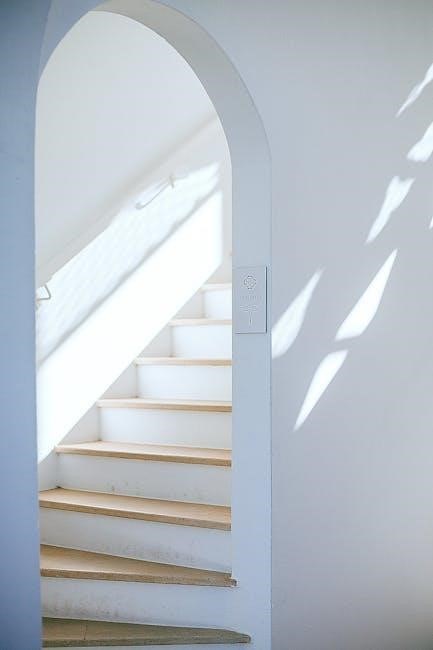
Staircase Safety Features
Staircase safety relies on handrails, guardrails, and adequate lighting to prevent falls; non-slip surfaces enhance traction, ensuring secure footing on each step.
Handrails and Guardrails: Preventing Falls
Handrails and guardrails are paramount for staircase safety, actively preventing accidental falls. Handrails provide a secure grip for users ascending or descending, offering crucial support and balance. Guardrails, conversely, act as a barrier, protecting individuals from tumbling over the edges of stairs or landings.
Proper installation is key; handrails must be continuous along the staircase, easily graspable, and at a consistent height. Guardrails should be sturdy and meet specific height requirements as dictated by building codes, ensuring comprehensive protection for all users, regardless of age or ability. These features are not merely additions, but integral components of a safe staircase design.
Lighting: Illuminating Steps for Visibility
Adequate lighting is fundamental to staircase safety, dramatically improving visibility and reducing the risk of trips and falls. Well-lit stairs allow users to clearly perceive each step, even in low-light conditions or during nighttime use. Strategic placement of lighting fixtures is crucial; consider illuminating both the treads and risers for optimal clarity.
Beyond basic illumination, incorporating motion-sensor lights can enhance safety and energy efficiency. Furthermore, consider the type of light – warm tones are often preferred for creating a welcoming atmosphere, while brighter lights prioritize functionality. A properly lit staircase is a safer staircase.
Non-Slip Surfaces: Enhancing Traction
Prioritizing traction is paramount for staircase safety; non-slip surfaces significantly reduce the risk of accidental slips and falls. Materials like textured carpets, non-slip treads, or specialized coatings can dramatically improve grip, especially on stairs prone to moisture or polished surfaces. Regularly cleaning stairs to remove dust, dirt, and spills is also essential for maintaining adequate traction.
Consider the footwear commonly used in the home when selecting non-slip solutions. Rugs should be securely fastened to prevent bunching. Implementing non-slip measures is a proactive step towards creating a safer environment for all stair users, enhancing peace of mind.
Staircase Design Considerations
Effective staircase design balances aesthetics, space, and accessibility; thoughtful planning ensures a harmonious integration with your home’s style and caters to all users.

Aesthetics and Style: Matching Your Home’s Decor
Staircases aren’t merely functional; they’re significant architectural elements capable of dramatically enhancing a home’s aesthetic appeal. The style of your staircase should seamlessly integrate with the existing décor. For traditional homes, classic wood staircases with ornate spindles and detailed newel posts often complement the overall design.
Conversely, modern homes benefit from sleek metal or glass staircases, offering a contemporary and minimalist look. Consider the color palette and materials used throughout your home to ensure a cohesive design. A well-chosen staircase can serve as a stunning focal point, elevating the entire interior.
Space Optimization: Choosing the Right Staircase Type
Optimizing space is paramount when selecting a staircase. Spiral staircases are ideal for tight footprints, offering a space-saving solution, though they may not be suitable for all users. L-shaped or U-shaped staircases, with their turns, can fit into corners and utilize available space efficiently.
Winder staircases navigate corners without landings, conserving space but requiring careful design for comfortable and safe ascent. Straight staircases, while requiring the most linear space, are the simplest to construct and often the most cost-effective. Careful consideration of your home’s layout is key.
Accessibility: Designing for All Ages and Abilities
Designing for accessibility ensures staircases are usable by people of all ages and abilities. Adhering to IRC guidelines for handrail height and grip size is crucial. Consistent rise and run dimensions minimize tripping hazards. Consider incorporating landings for resting points, particularly for those with mobility limitations.
Adequate stair width accommodates assistive devices like walkers or wheelchairs (where applicable, potentially alongside a lift). Proper lighting enhances visibility for individuals with visual impairments. Thoughtful design promotes inclusivity and safety for everyone.

iCloud and Staircases (Contextual Relevance ‒ Data Snippet)
iCloud facilitates photo management of staircase designs and renovations, accessible on PC; aiding planning and visualization through stored images and design software.
iCloud Storage and Photo Management (Relating to photos of staircases)
iCloud provides a seamless solution for storing and organizing photos documenting staircase projects, from initial inspiration to completed renovations. Users can effortlessly upload images of various staircase designs – straight, spiral, L-shaped, or U-shaped – ensuring a readily accessible visual record. This centralized storage allows for easy sharing with contractors, designers, or simply for personal reference.
Furthermore, iCloud’s optimization features help manage storage space, particularly crucial when dealing with numerous high-resolution images. The ability to access these photos across multiple devices – iPhones, iPads, and PCs – streamlines the design process, enabling convenient review and decision-making wherever inspiration strikes. It’s a valuable tool for preserving visual progress and documenting the evolution of a staircase project.
Accessing iCloud on PC (Potential for design software/planning)
Utilizing iCloud on a PC unlocks powerful possibilities for staircase design and planning. Installing the iCloud for Windows application grants access to essential files – sketches, measurements, and material selections – directly from your desktop. This integration facilitates seamless workflow with design software, allowing for easy import of staircase images and plans.
Alternatively, accessing iCloud via a web browser offers a platform-independent solution. This method enables collaboration with designers using various operating systems. Storing staircase project data in iCloud ensures backups and accessibility, safeguarding against data loss and promoting efficient project management, regardless of the chosen design tools.
Troubleshooting Common Staircase Issues
Staircase problems like squeaks, loose handrails, or uneven steps are common; identifying the source—often loose connections—is key to safe and effective repairs.
Squeaky Stairs: Identifying and Fixing the Source
Squeaky stairs are a common nuisance, often stemming from friction between treads and risers, or loose connections within the staircase structure. Pinpointing the exact source requires careful investigation – walk across the stairs, listening closely to determine where the noise originates. Often, the squeak comes from the treads rubbing against the stringers or from nails/screws loosening over time.
Fixing squeaks often involves tightening existing fasteners or adding new ones. Applying wood glue to the joints can also help dampen noise. For more persistent squeaks, consider shimming between the treads and stringers, or using lubricating powder like talc to reduce friction; Addressing squeaks promptly maintains staircase integrity and prevents further damage.
Loose Handrails: Repairing and Securing Handrails
Loose handrails pose a significant safety hazard and require immediate attention. The primary cause is often stripped screws or weakened mounting brackets. Begin by inspecting the points where the handrail connects to the stairs or wall – are the screws loose, or are the wood mounting blocks damaged? Tightening screws is the first step, but if they spin freely, replace them with longer, thicker screws.
If the mounting blocks are damaged, they may need to be reinforced or replaced entirely. Adding wood glue and additional screws can provide extra stability. Ensure the handrail is firmly secured along its entire length, offering reliable support during use. Prioritizing handrail stability is crucial for preventing falls.
Uneven Steps: Addressing Leveling Problems
Uneven steps create a tripping hazard and diminish staircase safety. Identifying the cause is the first step; settlement of the supporting structure, improperly installed treads, or wear and tear can all contribute. Use a level to pinpoint which steps are out of alignment. Minor discrepancies can sometimes be corrected by shimming the treads from below, using wood shims and construction adhesive.
For more significant leveling issues, the treads may need to be removed and re-installed, ensuring proper support from the stringers. If the stringers themselves are uneven, professional structural assessment is recommended, as this indicates a more serious underlying problem requiring expert repair.